Monday, March 27, 2017

The super heroic Soviet heroes


In the early 1940s the US, USSR, and the UK led the efforts to defeat Fascist countries in World War II.  Americans met Soviet counterparts at the River Elbe, in 1945.  In the next 5 years allies became enemies, during a stand off called the Cold War.  The Korean war, the Vietnam war and other conflicts became chessboards between the players of US and Nato allies, versus the Warsaw Pact and the USSR. 
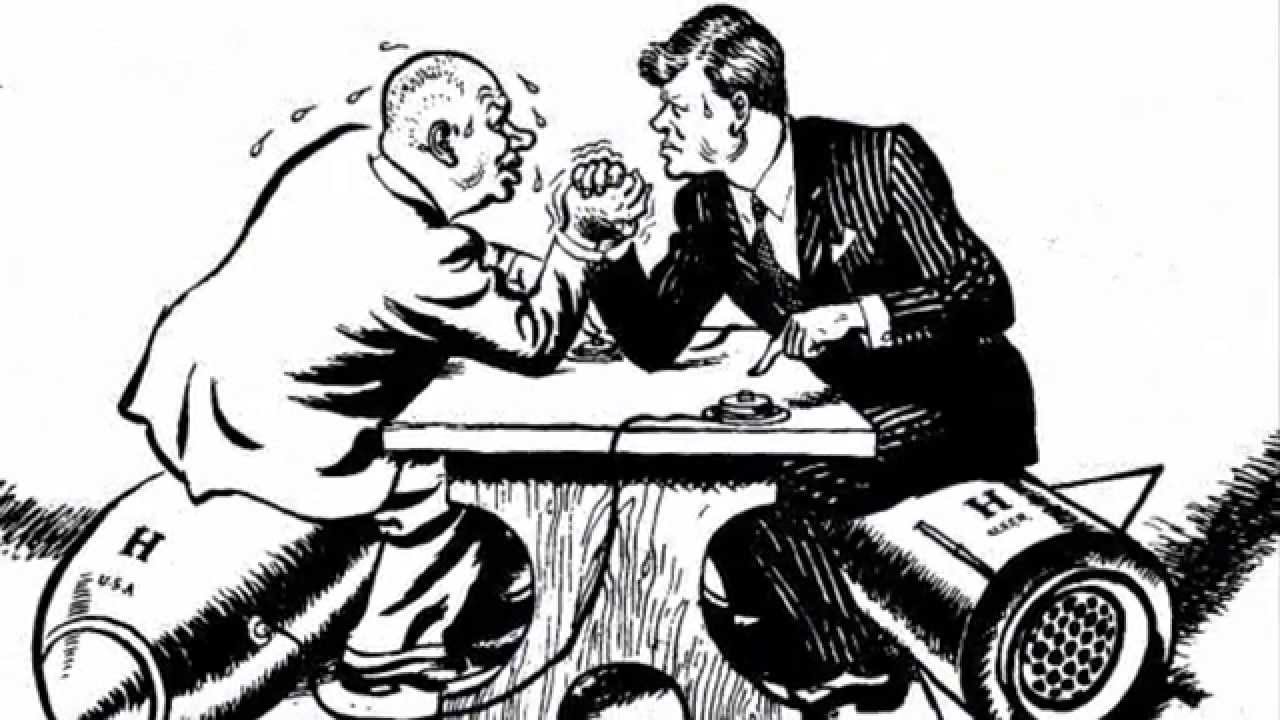


The Cuban Missile crisis, between the US and USSR over the island of Cuba being nuclear armed by the Soviets, nearly led to a nuclear conflict.  Reviews of the records from the day showed how very close we came to tragedy.

There was a rivalry between the USSR and the US to reach the Moon, and explore space.  The Soviets arrived in space first, but the US landed upon the moon in 1969. 

In 1963 John F. Kennedy was killed.  Some policy makers believed it was due to Soviet KGB and proxies.  The US CIA plotted to assassinate Fidel Castro.  They failed.


When Czechoslovakia was invaded by the Warsaw Pact, many of the NATO allies were shocked that the Soviets acted with haste.  As much as anywhere else the invasion showed that there were Nato and Warsaw Pact forces that, if wrongly pushed, could lead to a greater war.

In 1979 when Afghanistan was invaded by troops of the USSR,  American President Jimmy Carter called for a boycott and for other actions to punish the country.   Along with this Iran had overthrown their Rightist leader for a Islamic revolutionary leadership.  This led to a taking of hostages at the US Embassy.

The first sign of hope for the West that the Russian bear was not as powerful as he seemed happened in Poland, when there was a Labor Union movement that resisted the Soviet form of governance.  It called itself Solidarity.  The Communists stepped back.  They didn't leave Poland, but for the first time in years some of the power and control over the people in Poland had been surrendered to a union of people.  Like the Kronstadt revolution, it wasn't an act by the Monarchists or Right wing, it was the people taking back the right to govern themselves in a true representative fashion.  They were likely still hardcore Socialist.  They weren't willing, however, to accept the Soviet Puppet Polish Communist leaders.

In 1980's Olympics the American team of amateurs defeated the Soviet Union team, of well compensated veterans of hockey.  And then the US followed that with a defeat of Finland.  America felt a small rush.  And then, when the US elected President Ronald Reagan, numerous factors caused the US to rise, and the Soviet fortunes to fall.

Eventually Mikhail Gorbachev of the USSR over saw the retreat of Soviet forces from Eastern Europe, and the Berlin Wall fell, in 1991.  The Cold War seemed to be over, and the West had won.


The Soviets lost.  But who really wins when two former allies square off and arm themselves with enough weapons to repeatedly destroy the world?

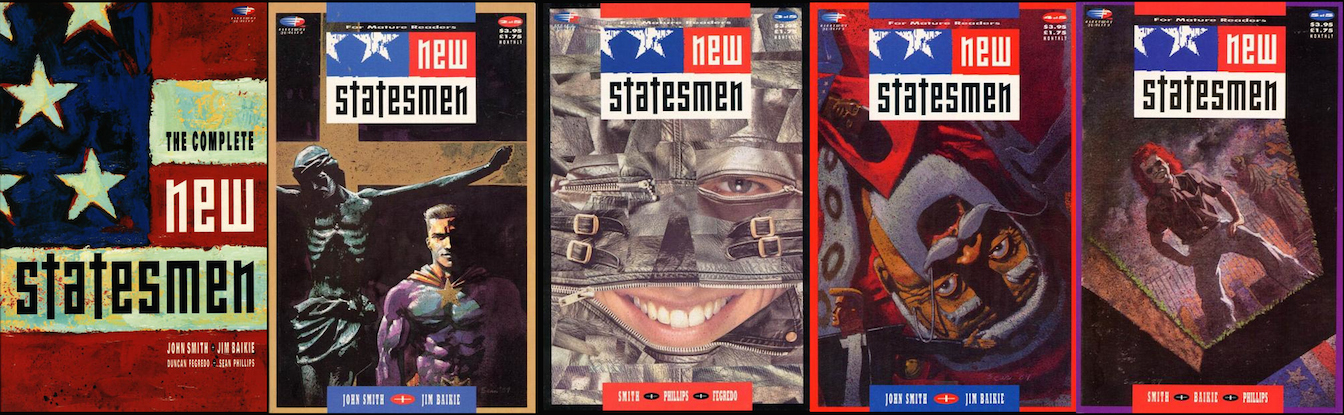
Here is a list of comic books with Soviet/Russian heroes, and some with simply propaganda stories.  They are all interesting, and some better than others.

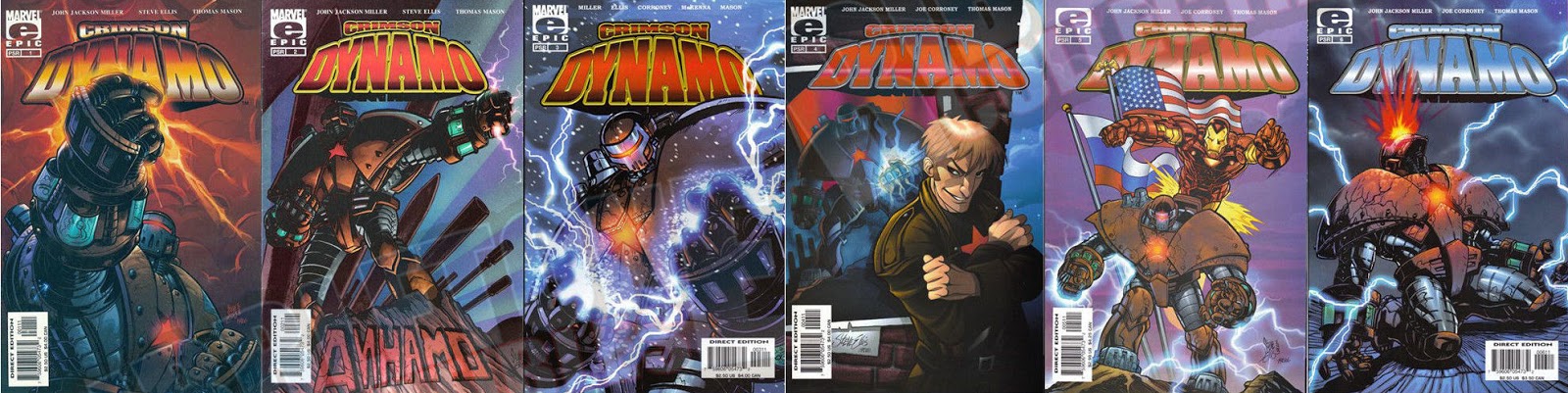
CRIMSON DYNAMO 
John Jackson Miller Story
Steve Ellis and Joe Coroney Art

Marvel Epic

Russian collegiate Gennady Gavrilov became the eighth Crimson Dynamo after he found the helmet of a "Beta unit" designed by Anton Vanko based on but improved over the original, with its very own recharging satellite in orbit. Believing the helmet to be a sophisticated gaming system, Gavrilov caused the dormant armor to awaken and make its way towards the helmet, inadvertently leaving a trail of destruction. He would eventually, if briefly, wear the entire armor in a standoff with the Russian military. He kept the armor afterward.   (Source Wiki)

THE KGBeast
Jim Starlin words
Jim Aparo and Dan Decarlo art

Anatoli Knyazev (Russian: Анато́лий Кня́зев, Anatoliy Knyazev), code-named "The Beast", and known to the C.I.A. as the "KGBeast" was trained as an assassin by "The Hammer," a top secret cell of the KGB. In addition to being the master of several martial arts, his strength was cybernetically enhanced, and he had also mastered the use of every deadly weapon known. At the time of his first appearance, he was rumored to have killed at least 200 people, including Anwar El Sadat.  (Source WIKI)

Superman Red Son
Mark Millar words
Dave Johnson and Killian Plunkett art

The story mixes alternate versions of DC super-heroes with alternate-reality versions of real political figures such as Joseph Stalin and John F. Kennedy.  In Red Son, Superman's rocket ship lands on a Ukrainian collective farm rather than in Kansas, an implied reason being a small time difference (a handful of hours) from the original timeline, meaning Earth's rotation placed Ukraine in the ship's path instead of Kansas. Instead of fighting for "... truth, justice, and the American Way", Superman is described in Soviet radio broadcasts "... as the Champion of the common worker who fights a never-ending battle for Stalin, socialism, and the international expansion of the Warsaw Pact." His "secret identity" (i.e. the name his adoptive parents gave him) is a state secret.  (Source WIKI)


Green Lantern Corps character Kilowog had come from a planet that had a history similar to the Soviet Union.  He didn't get along perfectly with the government, not being a politically centered hero.  But he helped the Soviets create the Rocket Reds.  While they were a Soviet team of heroes who fought evil, they were also led by Communist Party principles.

Black Widow of Marvel Comics was a Russian spy, who was both lovely and dangerous.  She was a Spy, and Soviet, but also a hero.  She crossed the tight wire of Super Power politics with some difficulty.

Colossus was a hero from the Soviet Union, being a mutant who could transform himself from Flesh to Steel.  Various themes of Soviet Iron workers and such could be pasted upon him.

Red Guardian was a Soviet version of Captain America.  He was an equal opposite, but was not always an enemy of the Captain.

When the Soviet Union fell various themes of the Communist state became less apt and useful.  But the stories of the characters in the present soon changed from serving the Soviet state to instead serving the Russian state, post Cold War collapse.


The Red Star is a comic book series that took inspiration from the Communist state art, and mixes with this an alternative history of the Soviet Union, without the eventual collapse experienced in the current reality.  It is a work that is very bright and shining, but sadly with too little coming out to support the overall franchise.


In the late 1940s throughout the 1950s American publishers used the Soviet Union and Warsaw Pact as they had earlier Adolf Hitler and the Nazis.  In order to raise awareness of the Communist threat, publishers and organizations used comics to help tell their story.  There are/were many differences between Nazism and Communism, but in the real world Stalin was responsible for more deaths than Hitler.  And so, there was perhaps a valid comparison between the two.


Sunday, March 19, 2017

Stories of Serious Heroes


The wave of movies based upon super heroes has been good for comic books, in many ways.  The source material for these movies, the books have for decades been more serious than the general public understood or believed.  Some of the reason that the comic books were not taken as seriously as the medium was, was that in the beginning comics were aimed at kids, both in terms of tone, and price point and target audience.  The comic book industry boomed at various points, but in particular during World War II and the Korean conflict.  The reason for the boom wasn't sales to children, it was US servicemen and women who had time, and money, when not in action.  But these were also considered throw away material.  10 cent paper magazines didn't fare well for long term collection, when in a bunker, or foxhole, or ship bay.  Along with the temporary nature of small paper magazines in war zones, the general trend was to share among friends.


While comics became more serious in the years beyond the war years, the comic book industry at various times suffered a lack of sales, loss of publishers, and contraction.  But during the 1960s the industry experienced rebirth.  However, it became less diverse in genres, and more focused upon super heroes as the genre and subject matter.  Some people do not read super hero comics, and prefer spies, romance, horror and more.  But the industry focused upon the sales they had, rather than support less saleworthy books.


As stories of super heroes are the most fantastic of genres, many people suggested that super hero comics were not serious, were not "art", and were not doing anything new. 

The arrival of serious stories in the comic book industry had roots in new artists and new writers using the previously established heroes and reimagining them.  Also, comics moved from kids comics, DC Comics and Marvel Comics and underground comix, to a wide proliferation of new publishers, and a new form of the market, called the direct market.  This led to an explosion of intelligent, different, and more adult works. 


It is certainly true that the comics published during the 1980s were either modern and intelligent, or artifacts of a previous era, childlike, amateurish, or out of step with the general market it had targeted. 

In the present there are many comics than people can pick up that are miles and miles away from the silly, quaint, childish books that existed before the 1980s.  The industry faced accusations of offering children adult content.  And there were arguments within the industry, trying to secure an area for the modern creative voice, among the industry that still wanted the sales from children. 


But children, in the 80s up to the present, have a vast number of other entertainment sources that can be more interactive, stood up to repeat viewings, or play, that occupied the niche comics formerly had.  Some critics think super heroes automatically placed comics, in general, in the ghetto of dismissive attitudes towards the medium, belief that comics remained for children, and that adult orientated stories using super heroes were wrongly aimed.

The truth, however, is that comic books are a medium, and just like television, radio, film, animation, there is no overarching judge to keep work from readers.  It follows that if a product is for sale, whoever buys it becomes the audience.  IF super heroes are childlike, foolish, unbelievable, they would appeal to children.  But the average reader is not a child, so that viewpoint becomes nullified.

What super heroes are, and can become, is stories.  They are stories using heroes in costume just as the people of the past used myth and legends as entertainment.  They are often written as allegories for modern problems, and can be seen as a means by which to explore issues. 

Whether the issue in the comic book story is the question of what is a hero, or who will defend the country or people, or how much trust do our heroes deserve, the stories can all be told in layered, intelligent work, that provides both entertainment and provocation of reflection.


The comic images shown here are to give offerings of serious super hero stories, that will be worth reading and gaining a respect for the works that treat themselves as being worthy of serious thought.

They can all be found upon Amazon, Ebay, or a local comics store.

COMIC BOOK STORE LOCATOR


Wednesday, March 15, 2017

Quest In Show


The 1980s saw a swarm of small independent comic book companies. Many of them only lasted a year or two; some achieved an iconic status due to one or two innovative flagship titles; and a few are still going today. One aspect that many of these companies had in common was that many of them bought licenses to adapt popular TV series as comic books. The quality of these books varied with the talent the companies were able to bring to them. In some cases, the popularity of a licensed title might be the only thing keeping a struggling company afloat; but even in the case of a fairly well-established independent with decent-selling original titles in its stable, a popular licensed title added prestige and readers to the company.

For much of the '80s, Comico was one of the notable Independents. It came to prominence publishing original comics such as Mark Wagner's MAGE and GRENDEL and Bill Willingham's ELEMENTALS. Over the course of its run, Comico published licensed versions of the anime series ROBOTECH and STAR BLAZERS; but my favorite title from that company would have to be their version of JONNY QUEST.

JONNY QUEST was created by comics artist Doug Wildey, who started off drawing western comics for Atlas Comics, the successor to Timely Comics which later still became Marvel. He drew for a number of adventure anthology comics and for a time did a newspaper comic strip based on THE SAINT and a little ghosting for STEVE CANYON. He came to Hollywood to work briefly under Alex Toth on SPACE ANGEL, a semi-animated TV show legendary for superimposing actual footage of moving lips over static images of the characters to make it look like the characters were speaking. While in Hollywood, he visited Hanna-Barbara Studios looking for work. At the time, Joe Barbara was interested in developing a cartoon based on “Jack Armstrong: All-American Boy”, a radio adventure drama, and hired Wildey to work on it.

As it turned out, Joe was unable to get the rights to adapt Jack Armstrong, so he had Wildey re-work the material into an original character. Wildey used magazines such as “Popular Science”, “Popular Mechanics” and “Science Digest” as inspiration to give the technology used in the series a sense of being futuristic, but just around the corner. He also drew on classic movies featuring adventurous kids, and the comic strip TERRY AND THE PIRATES by one of his major artistic influences Milton Caniff. At Joe Barbara's request, he also stirred in a bit of James Bond; “Doctor No” had recently appeared in theaters, and spy stories were hot.

Jonny Quest, of course, was an adventurous boy who traveled the world with his father, a brilliant scientist along with his best friend and adopted brother Hadji, an ex-secret agent who acts as a bodyguard for Dr. Quest and his family, and Jonny's yappy dog Bandit. (Doug Wildey originally wanted to give Jonny a pet monkey, but Hanna-Barbara insisted on a more traditional pet drawn in a cartoony style). The series was full of exotic locations, exciting action and had one of the best opening themes of any cartoon ever. (“Tank!”, the opening theme music from the anime series COWBOY BEBOP is a close second, but I give the JQ theme an edge because it has a pterodactyl).

The animation on JONNY QUEST was extremely limited; not as bad as the animation from SPACE ANGEL, but you can still see every shortcut they used if you look for them. But the base character design, rendered with strong inks by Wildey, was so strong that the look carried the deficiencies in animation.

The artwork was something of a liability. Wildey drew in a realistic style and wanted the series to be as realistic as possible; but there were very few animators in Hollywood at that time who could draw like that. Wildey had to do much of the key animation himself. This made the show expensive to produce and it only ran for twenty-six episodes; but it had a long life in syndication.

The show was produced for an evening time slot rather than a Saturday Morning one. H-B had success running THE FLINTSTONES as an evening show, essentially a sitcom aimed at a grown up audience; and JQ was also aimed at the same audience that would enjoy a Bond movie or an adventure novel. There was a lot of action, and a fair amount of violence; although the show avoided explicit blood and gore, bad guys often met brutal and highly ironic fates. This became a problem in the '70s when people became more concerned with Violence in Children's Television and well-meaning watchdogs put us on the slippery slope to THE GET-ALONG GANG.

The Comico adaptation came about twenty years after the show went off the air, but they did it right. Doug Wildey was involved with the comic, doing promotional artwork for it and writing a story and doing the art for the first issue. He also wrote and illustrated a three-part limited series adapting three of his favorite episodes in his lush, painterly style.

The rest of the series was written by William Messner-Loebs, a writer who previous created and drew JOURNEY: THE ADVENTURES OF WOLVERINE MacALLISTAIR for Aardvark-Vanaheim, a quirky series set in frontier Michigan during the early 19th Century.. Messner-Loebs wrote 31 issues of JONNY QUEST and went on to write respectable runs on THE FLASH and WONDER WOMAN. For about title's first year, several different artists worked on the book, including Wendi Pini, Adam Kubert, Dan Speigel and others, before it settled down to the regular artistic team of Marc Hempel and Mark Wheatley.

The series did a good job of capturing the spirit of adventure from the original series. Messner-Loebs built on some of the characters, giving Dr. Benton Quest more of a personality beyond the Serious Scientist, and exploring Race Bannon's background.

One interesting thing the comic established was that Race is not only a bodyguard, he also doubles as a tutor for the boys. Since he is primarily trained as a secret agent and not an educator, that means that much of the time he's only a few pages ahead of the boys in the lessons he's teaching them.

One of the interesting characters added to Team Quest's supporting cast is Kathy Martin, a social worker who shows up in issue #7 to demand to know why Jonny and Hadji haven't been in school, only to get swept up in one of the Quest's adventures. She becomes a recurring character and something of a romantic interest for Dr. Quest.

Some of the notable stories include #2, “Enter Race Bannon”, in which we get the story of how Race Bannon is first assigned to bodyguard the Quest family, at a time when Dr. Quest's wife is dying in a hospital. We get some lovely glimpses in flashback of Dr. Quest's romance with her that are sad but sweet. The scene in which Dr. Quest talks to the grieving Jonny about his mother and her passing is sensitive and I think true to the character.

Mrs. Quest appears again in #15, “The Sins of Zin”, another flashback story about Dr, Quest's first meeting with the sinister Dr. Zin when he and his wife are attending a science conference. The friendly verbal fencing between Zin and Mama Quest, the only one in the story who recognizes that Zin is more than he seems, shows that she may not be a brilliant scientist like her husband, but she has plenty of smarts herself.

Issue #5, “Jade, Incorporated”, brought back fan favorite Jezebel Jade, the bad girl from Race's past, in a tale of exotic intrigue reminiscent of TERRY AND THE PIRATES, and which paved the way for a later JEZEBEL JADE limited series.

Issues #23-24 are fun homage to The Prisoner of Zenda, in which Dr. Quest must impersonate the look-alike prince of a Ruritanian nation.

Bandit takes the spotlight in #25, “Butch”, as the dog gets separated from Jonny and wanders about a city alone.

Some of the stories were better than others. Issue #16, “Plague”, about a weird epidemic of lycanthropy, was I think supposed to be a parable about hysteria over the AIDS epidemic, but just seemed ham-handed to me. #22, “Vantage Point”, was an interesting idea: Dr. Quest agrees to participate in an experiment where a camera will record what goes on in his compound for a week; and hilarity ensues. The story is seen entirely from the camera's point of view, which is an interesting idea from the storytelling end, but is visually boring.


Overall, though, Comico's JONNY QUEST was a good series that more than did justice to the cartoon on which it was based.

Sunday, February 26, 2017

Crimes, Investigations, and Bad men

I get asked a lot about the best comics or books for a variety of genres.  I am better with some genres than others, because it all depends on what you've read or become exposed to.  I read True Crime often, and so here in this column I suggest a variety of books and comics to choose.  These are not reviews, obviously but some people just need to be made aware of what there is.


Mickey Spillane's books sold thousands of copies and went deep into new printings.  His work is less artful than it is violent and wild.  If you like private detective stories this is one writer you need to become acquainted with.  He was also prolific.


The comic company DC had an imprint called Vertigo for its especially dark adult oriented work.  They created a subimprint called Vertigo Crime, and the books have a look, a feel and taste of quality.  The house style placed upon generally superior works by excellent writers allowed each of the books rise above the level of quality most publishers achieve on their best days.


Brian Michael Bendis is among my favorite writers of comics, in general, and with his crime comics quite specifically.  He seems to understand that true dialogue and human emotions play a part in the verisimilitude of any work.  His crime stories are powerful, and occupy a place between true crime depth, and action and violence worthy of the pulp hard boiled detective it shares a genre with.


Steve Niles is a horror writer who has a character, Cal McDonald who is a nexus for strange things, drugs, violence and darkness.  Niles is among my favorite writers, and his three novels about Cal McDonald have been read by me numerous times.  They are not for the faint of heart, but they are worthy of your time.


Max Allan Collins has written comics and books, and I like his work, but his particular niche of detective stories are born from the pulp crime he obviously has read.  They are easily read, and each work moves along quickly.  Dick Tracy, by Collins is a very entertaining figure, and he captures perfectly the era from which he birthed.


Frank Miller has repeatedly evolved in his life as a comic artist and writer.   His studies included the use of Crime Noir, impressionistic images, and what works best to achieve his desired goal in story telling.  Deciding to do Sin City, Miller desired to make a setting a vital part of the story, equal to the characters, and the look.  He also decided to change up the way people read comics.  He merged an influence from Goseki Kojima and various American artists, perhaps Alex Toth among them.  He looked at Japanese comics as being too wordy, but very entertaining.  He saw American comics as being the reverse, long winded and slow developing.  He merged both best qualities, and tried to work around the limitations.  Sin City is a great series, and it spawned a great movie from his artistic and writer eye.

Here are more books to pursue.


Sunday, February 12, 2017

Doctor Strange vs. The Christian Rocker


One of my good friends when I lived in Darkest Iowa was a big Doctor Strange fan. He and his wife are costumers and one of his favorite creations was a Doctor Strange costume he made, complete with an Eye of Aggamato that he crafted around a hologram of a human eye that he bought through a science supply shop. His wife and he would sometimes attend comics conventions as Doctor Strange and Clea. He told me once that when they bought their house, they persuaded the bank to accept his collection of DOCTOR STRANGE comics as collateral.

It was back when I knew my friend that Doctor Strange faced a threat even more intimidating than the Dread Dormammu or the Hoary Hosts of Hoggath: the Aggressive Attorneys of Amy.

But first, some backstory.

The 1970s were a boom time for horror comics. Movies like The Exorcist and Rosemary's Baby were big in the theaters, and DC Comics was putting out a slew of horror-themed anthologies. Marvel was also part of this trend, creating such characters as Morbius the Living Vampire, Werewolf by Night, and Brother Voodoo, and reviving Doctor Strange. Possibly the best comic Marvel produced during this era was TOMB OF DRACULA, written by Marv Wolfman (no relation) and drawn by Gene Colan. The title focused on a team of vampire hunters who fought Dracula and other supernatural menaces. TOMB OF DRACULA ran for a respectable seventy issues, making it the longest-running comic book ever to have a villain as its title character.

The series also integrated vampires into the Marvel Universe. Until about 1971, the Comics Code had banned vampires from appearing in Code-Approved Comics. Marvel had skirted the rules with Morbius, who was just sorta a vampire but not actually undead, (hence his tagline “the LIVING Vampire”), but a loosening of the Code rules in the early '70s allowed Marvel to run with the honest-to-Stoker real deal. Dracula fought with Spider-Man and Captain America fought a Nazi vampire named Baron Blood, created by Roy Thomas for THE INVADERS and brought back to fight Modern-Day Cap by Roger Stern and John Byrne.

But too much of anything, even the Fiendish Undead, is not necessarily a good thing. At one point, someone decided that the vampires had outstayed their welcome. Perhaps Someone from On High decided that Gothic creepiness did not fit the Mighty Marvel Manner. I'm guessing this was Jim Shooter, but then, fans of my era love blaming Shooter for everything bad Marvel did in the early '80s, so I could easily be mistaken. During Steve Engelhart's run on DOCTOR STRANGE, he did a storyline in which the Sorcerer Supreme sought a magic ritual called the Montressi Formula which would eliminate all vampires. He succeeded, and vampires were banished from the Marvel Universe.

But it takes more than a stake through the heart to keep a vampire down. In 1990, Marvel was running a new DOCTOR STRANGE comic, once again written by Roy Thomas. Roy has always loved incorporating literary characters and other bits history, lore and pop culture into his stories; and he did a five-issue story arc titled “The Vampiric Verses” which brought vampires back. A semi-immortal witch (and ex-girlfriend of Doctor Strange's) named Morgana Blessing needs the Blood of the Undead to maintain her unnaturally long life; and so she manages to bring the vampires back. Doctor Strange's brother becomes the first to fall victim to this new vampiric outbreak and becomes the new Baron Blood. Strange must team up with Morbius the Living Vampire (Not Really a Vampire, remember) and Brother Voodoo to fight this new menace.

And here's where things take a left turn. The second issue of the story line, DOCTOR STRANGE #15, featured a striking cover dominated by the face of a young woman starting intently out at the readers. The woman is meant to be Morgana Blessing, but the artist, Jackson Guice, used an existing photo for the image. From the looks of the image, I'd guess that he took a high-contrast photostat of the original photo, although he might have traced it by hand; but the face was definitely from a photograph, and people quickly identified it. Because the photo Guice used was from the cover of a record album.

I don't know what possessed Guice (if that is the appropriate verb to use in this situation) to use the face of a Christian Contemporary Pop singer to represent an occultist dabbling in vampiric rituals, but the earnest, haunted face staring out from the cover of DOCTOR STRANGE #15 was undoubtedly Amy Grant's, as it appeared on her 1986 platinum compilation album “The Collection”.

Grant's managers, Mike Blanton and Dan Harrell, filed a complaint against Marvel Comics for the cover. They weren't suing about copyright infringement, because the copyright on that particular photo was held by the commercial photographer who took it. Their argument was that having Amy's face appear on an occult-themed comic book would give her fans the impression that she endorsed it and would damage her reputation in the Christian music community.

In their complaint, the managers argued:

“...many fans of Christian music consider interest in witchcraft and the occult to be antithetical to their Christian beliefs and to the message of Christian music in general. Therefore, an association of Amy Grant or her likeness [with Doctor Strange] is likely to cause irreparable injury to Grant's reputation and good will.”

“They're calling Doctor Strange a Satanist” some comic fans sneered at the time; and I have to admit I was somewhat bemused by the story myself. I guess I've always drawn a distinction between real life occult practices and fantasy magic in fiction. A lot of Christians sincerely hold that any dabbling in mystic stuff is a short trip to Perdition, and so they condemn Dungeons & Dragons and Harry Potter and even look askance at J.R.R. Tolkien despite his friendship with C.S. Lewis. As the son of a Lutheran pastor who was also a SF fan, I kind of have a foot in both camps: while I can understand their reasoning, I don't think we have to regard all Fantasy as an Affront to Heaven.

But the bottom line in this instance was that Marvel used Amy Grant's likeness without her permission, to promote a comic book with which she did not ask to be associated, nor did she wish to. Putting her face on the cover was a dick move. The book's editor should have caught it and had the artist change it before going to print.

Marvel and Grant's people settled the matter out of court. The settlement was sealed, so we don't know what sort of agreement the two sides came to. Since Marvel was not required to admit any wrongdoing nor liability in the matter, I'm guessing that the settlement was a substantial one. Then again, perhaps Amy's people feared that a big public trial would only cement the public's association between her and Doctor Strange, and so might have been agreeable to a more modest settlement to bury the matter. By the time the settlement was reached, a year had passed and the issue was no longer on the shelves, so it is unlikely that there was any demand that it be recalled. DOCTOR STRANGE #15 had long ago either sold out or been filed away in the Back Issues bin where you can buy U.S.A. 1 and KICKERS, INC. for a dollar.

But the controversy lives on in comic book legend. In a weird sort of way, like poor Morgana, that cover achieved a kind of immortality.


Thursday, February 9, 2017

Back Issues to Pursue


Some people are unaware that I wrote for and did interviews for a variety of different comic book websites.  CBR, Slushfactory, UGO, and more were cursed or blessed, depending on your worldview, by my presence.  I did this along with starting the original site where this blog grew out of, called Popthought . com .  Popthought was savaged by hackers in 2008 and truly wiped out.  But over the years since I began, I've done over 200 interviews, and reviewed a great number of comics.  I tried however not give much time to the "odd turd" of a comic, and hold up high the best.  As such some people considered me a whore, and someone who had no taste, I liked everything.  I understand why they think that, in an often hyper critical world, being positive either looks like you are lying, or stupid, or both.  I simply felt there was enough of the negative, I wanted to hold high the books I thought deserved attention.  Perhaps I was wrong.  But the present piece of writing is focused on COMIC BOOKS I HAVE ENJOYED.  Therefore, these are recommendations.  I'll try to explain why I liked them, but this isn't a review.  It is an offering.  Please consider reading these works yourself if the ideas sound good.

James Vance has a way of writing stories from human events that ring true, and he is very good at making stories of those events work as comics.  The American past, especially the 1930s Great Depression era are interesting, but having these works takes you on a tour of the past with crisp writing and excellent art.  As such, people who love history would probably find these comics well worth your interest.

By including four different books by one creative artist it might seem that I like Matt Wagner personally.  I've had a couple brief experiences with him, and I was not a fan of him.  But, that doesn't stop me from seriously enjoying much of his work.  His character Grendel is a demon, in many forms, genders, and incarnations, who is the protagonist of his works, but Grendel is not a good guy.  No, like I said, HE/SHE IS A DEMON.  There is a maturity in the writings that make Grendel interesting, at the same time evil and miserable.  I like, very much, Wagner's art, and writing nearly as much.  The collection The Demon reprinted his mini-series of the DC Comics character, one that took a modern more accessible look at the whole of the character and his human alter ego.  I liked this book because it treated the original character as done by Jack Kirby justice, while making the character more interesting and sympathetic by being a serious story.  The works about the character but not by Kirby or Wagner were nearly always disappointing to me, because the character was mostly seen as a boob.  And since I liked the concept, Wagner's take returned it to the tone it works best as.


I liked the concept of The Red Star.  It was a brilliant idea, taking the former Soviet Union and making it a still alive if also decayed empire, and adding futuristic concepts.  Afghanistan and the future conflicts of the USSR are made into sites for the battles, with epic heroes, and modern science fiction style equipment.   It has many forms of media to interpret it.  RPGs, Video games, and perhaps a movie in the offing.  I really enjoyed these, and while I might have loved the book, I regret the slow output of the chapters.


I like the character of Batman.  In my childhood my brother was always Batman, and I was Robin.  I believe there is actually photographic evidence of this.  Anyhow, I like the Batman, and think him perhaps the best concept that comics have created.  I think most people who don't like him don't get him, but I accept that I am probably wrong there. So, when I read the best works of Batman I generally enjoy them.  At one time I wanted to own all the tpbs of the Batman, but, since that time I've decided that reading the stories once, I don't altogether need to keep reading them.  These four comics, Batman Masque, Batman Castle of the Bat, Batman Holy Terror, and Batman Leatherwing are four comics that can be read as stand alone what if events in the 4 color history of the bat.

Each work is considerably different than the iconic midnight hero that appears every month from DC.  These are Elseworlds, considerations of the Batman's life if fixed in the fictional settings, Phantom of the Opera, Frankenstein, Pirate adventures, and as the foil of a Theocratic Nightmare.

I was greatly entertained by each, and recommend them, unless you hate the bat.


Wednesday, January 4, 2017

Up And Atom


Charlton Comics has been called “the low-rent district of the comics industry”, having some of the cheapest rates in comics. But they granted their underpaid creators more creative freedom than their bigger competitors, and the company served as a proving grounds for new talent. During the 1960s they produced an innovative line of “Action Heroes” that were fondly remembered by fans of that generation: characters like the Blue Beetle, the Question, Peter Cannon – Thunderbolt, and Captain Atom.

The company dwindled in the '70s, and finally shut down its comic book division in the early '80s, selling most of its characters to DC Comics. Writer Alan Moore originally pitched his WATCHMEN series with the idea of using the Charlton heroes as characters, and the trivia-minded comics fan can easily see the inspiration Moore's characters took from the Action Hero originals. DC did not use the Charleton heroes much until CRISIS ON INFINITE EARTHS, which re-booted the DC Universe and combined the myriad worlds of the Multiverse into a single, theoretically simpler, continuity. This gave DC the opportunity to fold the Charlton heroes into the Post-Crisis Universe.

Some of the characters, like Blue Beetle, were fairly easy to port over; but Captain Atom posed some special problems. His origin story was tied pretty closely to the Space Race era and difficult to update. He was a scientist named Allen Adam making last-minute adjustments to a rocket when he had to climb down into the rocket to retrieve a dropped wrench and found himself trapped inside when the rocket blasted off. The rocket exploded in the upper atmosphere, atomizing him. But he got better. He somehow re-assembled his atomic structure, gaining atomic powers in the process. (“Adam”, “Atom”. Geddit? Yeah, you got it.)

By the late '80s, rocket scientists were no longer as cutting-edge cool as they were in 1960 when Captain Atom premiered; and the US no longer performed atmospheric atomic tests. And I suspect that, a year after the Challenger Space Shuttle Disaster, DC might have thought that giving a hero super-powers in a rocket explosion might have been a little tacky.

Whatever the reason, writer Cary Bates came up with a new origin for the re-tooled Captain Atom that was grounded in the present-day but also had ties to the 1960s era, and managed to incorporate the character's adventures as a Charlton Hero in a clever and unusual way.

In the new version, he was Captain Nathaniel Adam, a US Air Force pilot serving during the Vietnam War. Court-martialed for a crime he did not commit, Adam is sentenced to death, but is promised an unconditional presidential pardon if he volunteers for a dangerous experiment. The Military has recovered a crashed alien spaceship composed of a strange metal with weird properties; and they want to test the metal's durability by putting a human test subject in a shell made of the metal and detonating an atomic bomb on top of it. Makes sense to me. Unexpectedly, both the metal and the subject disappear.

Nearly twenty years later, Adam re-appears, the metal now fused with his body. The metal has the property of absorbing energy, but it has a limit as to how much it can absorb all at once. When that limit is exceeded, as it was in the bomb test, it becomes displaced in time and kicked forward. In addition to invulnerability, he has gained the power of flight and the ability to tap into the “Quantum Field” to shoot blasts of energy.

Dr. Megala, the scientist working on the “Captain Atom Project” has been studying the data from the initial test and figured all this out; so he and the Project's head, General Eiling, have been waiting for Nathaniel to pop up. They see this as an opportunity to create their own super-hero, working for the Pentagon and American Interests rather than abstract concepts like Truth and Justice and All That Jazz.

So Eiling and his people design a media roll-out to introduce their “Captain Atom” to the world, complete with a fake background claiming that he had been active as a super-hero in secret for many years. The character's adventures as a Charlton Action Hero were retconned to be this fictional backstory. Of course, the fact that Captain Atom would be working for the Government was not part of the press package. This bogus background was referred to in the comic as “The Big Lie”.

As far as the world is concerned, Nathaniel Adam died two decades ago, a dishonored traitor. Because he was presumed dead, his presidential pardon was never signed, and the current Administration does not acknowledge that the promise had ever been made. Adam's only hope to exonerate his name is to go along with Eiling's plan and become, essentially, a covert government agent whose cover is being a super-hero.

Eiling is a real piece of work. He had been Nathaniel Adam's commander during the War and presided over the court-marital. We also come to learn that Eiling was the true culprit in the crime for which Adam was convicted. What's more, after Adam's “death”, Eiling married his widow and raised his two children, now adult, to believe that he was a traitor. It's like Eiling went out of his way to make Adam's return to life a living hell.

It takes a while for Captain Atom to get the hang of being a hero, especially as he has all this other angst to juggle. About this time the Justice League was granted sanction by the United Nations, and the title of that series changed to JUSTICE LEAGUE INTERNATIONAL. As part of that deal, the Security Council, (well, okay; the United States and the Soviet Union), required that the US and the USSR be allowed to each appoint a hero to the team. The US-backed hero, (as if Batman and the others weren't America enough) was Captain Atom. So now Captain Atom is not only pretending to be a seasoned hero, he also has the job of spying on the Justice League.

(I suspect that part of the reason why he was placed on the Justice League was that the first issue established that he had a fondness for bad jokes, and that it perhaps was thought he might make a good fit in the lighter Giffen/DeMatties incarnation of the League. But apart from that first issue, where the jokes serve a plot function establishing his tension waiting for the bomb to go off, we never see him cracking any more. In fact, in the Justice League he acts more as a straight man; especially after he is appointed leader of the European branch of the JLI).

Captain Atom gains a rival in the form of Major Force, a second test subject for Megala's experiments: this one a brutish thug who instead of shooting energy blasts can create masses of “dark matter” out of the Quantum Field.”

Throughout the series, the Big Lie keeps resurfacing to complicate Captain Atom's life. Early on, an investigative reporter digging at Captain Atom's revealed history deduces the identity of one of his arch-enemies, Dr. Spectro. Actually, Dr. Spectro doesn't exist; but the reporter finds a scientist with expertise in the same fields as the fictitious Spectro and who has a shady criminal background. The guy she's found really is a crook, and faced with the prospect of being exposed for his true crimes by her mistaken allegations, he decides he might as well embrace the role that has been created for him. It ends up with Eiling having to put both the reporter and the imitation Spectro on the Project Captain Atom payroll in order to keep the secret.

Later on, Captain Atom tries to use the Big Lie for his own purposes. He tries to persuade JLI team-mate (and one-time fellow Charlton hero) Blue Beetle to help him with his investigations to clear Nathaniel Adam's name by claiming that he had previously worked with Beetle's predecessor, Dan Garret, (the Golden Age Blue Beetle). But this comes to bite him in his shiny silver butt. Beetle may be a goof in the JLI, but he's not stupid. He spots the holes in Atom's story and figures out he is lying. He then becomes obsessed with exposing his teammate, whom he now privately calls “Captain Traitor.”

Over the course of the series, Captain Atom is able to resolve many of his problems. He is able to re-connect with his children and earn their trust; he finds the evidence to exonerate him and expose Eiling's crimes; he confesses the truth about the Big Lie and he manages to grow into becoming the hero and the leader he was pretending to be. But although as a reader I appreciated this resolution, I have to admit that tying off these plot threads also lessened my interest in the series a bit. Partly, this was due to the loss of Pat Broderick, the artist for the early part of the run. I did not care much for his replacement.

Over the course of the series, it seemed to me that Captain Atom managed to pick up more girlfriends than most super-heroes. In an early issue he fought, and developed a romantic tension with, Plastique, a super-powered Quebec separatist terrorist, originally appearing in FIRESTORM. He encountered her a number of times and eventually married her, although the marriage did not work out.

He also met the fellow Charlton hero Nightshade, a super-powered government operative who allows the Captain Atom Project to borrow some of her cases to pad his fictional resume; and they develop a friendly, somewhat romantic relationship. She becomes a member of the Suicide Squad as one of the minders keeping the criminals on the team in line; and in one memorable crossover where the Squad battles the JLI, they pretend to fight, in order to preserve each other's cover, but are actually flirting.

Later on in the series, he briefly has a relationship with a woman who used to be a hippie war protestor during Vietnam and now runs a nostalgia shop. Although the pairing might seem odd, she actually has more in common with him than one might think, having lived through the same era. And in the pages of JUSTICE LEAGUE INTERNATIONAL and JUSTICE LEAGUE EUROPE, Captain Atom frequently found himself the object of romantic teasing from Catherine Colbert, the sexy UN liaison with the JLI's Paris embassy, and from the Crimson Fox, a flirtatious French crimefighter.

Near the end of the series, Captain Atom began exploring the nature of his powers, discovering that the alien ship whose metal now forms a part of his body is actually a sentient creature. One issue strongly suggested that through his “death” and “rebirth”, he might have become an Elemental Force, the way Alan Moore had re-defined Swamp Thing as a Plant Elemental and how Firestorm had been re-defined as a Fire Elemental and Red Tornado as an Air Elemental.

But as Captain Atom's series wound down, another crisis loomed. DC announced a cross-over series called ARMAGEDDON 2001 which would take place over that year's summer annuals. The premise was that a Time Traveler from the Future named Waverider reveals that in ten year's time (the year 2001), a villain calling himself Monarch would kill all the heroes and rule the world. Waverider does not know Monarch's identity, other than that he was once a hero himself; but he does have the power to see an individual's future timeline by touching him. So the idea was in each title's Annual, Waverider would meet a different hero and see what that hero would be doing ten years into the future. And that the readers would be kept in suspense as to who would ultimately turn evil and become the Monarch.

Problem was, there was no suspense. It was said at the time that the news was “leaked”, but anyone with access to DC's publishing schedule, available at any comic book shop, would see that only two titles were being canceled that summer: HAWK AND DOVE and CAPTAIN ATOM; and that the JUSTICE LEAGUE EUROPE ANNUAL, which had Captain Atom as a member, would be the last one published. It was pretty obvious that they were setting Captain Atom up to be this Monarch villain.

DC had to do some frantic re-writing to change the ending. They made Hawk, from HAWK AND DOVE be the villain instead. A lot of fans were upset by the slapdash inconsistency of this ending, especially fans of H&D, since this face-heel turn ripped up everything that had been established between the characters of Hawk and Dove in the preceding series.

Captain Atom kind of fell out of the DC Universe for a while after that. Oh, he headlined in a spin-off miniseries titled ARMAGEDDON: THE ALIEN AGENDA in which he battled Monarch through time, and he made other appearances; but I lost interest in them. And often when he did appear, his writers seemed to make him a two-dimensional “Gung-Ho Army Guy” and ignored Cary Bates's characterization.


He has gone through further re-boots; which I suppose is appropriate, since today is as distant from the Reagan Era as DC's CAPTAIN ATOM #1 was from the Vietnam Era. Still, CAPTAIN ATOM was an interesting series and I enjoyed it.